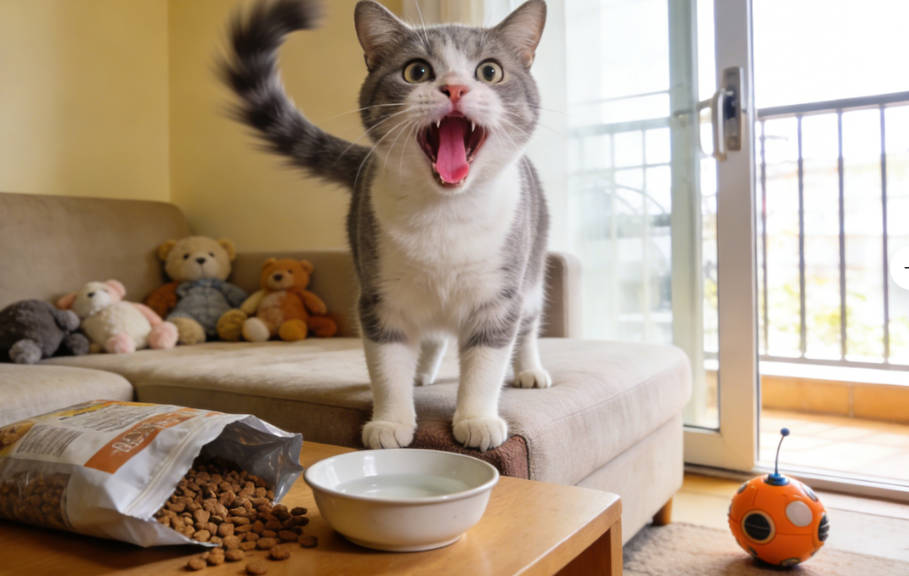
Going Crazy with Cat Meowing? How to Manage a Talkative Cat
Author: Emma Johnson
Category: Cat Behavior & Care
While meowing cats can be very cute and interactive, excessive meowing can cause real challenges, such as disturbing your sleep or even affecting your mood. Understanding why cats meow and how to manage it is key to living happily with your feline companion.
---
**Reasons Cats Meow Frequently**
Behavior is influenced by four main factors: past experiences, environment, genetics, and health conditions. These apply to excessive meowing as well.
**1. Past Experiences**
**Overindulgence by Owners:** Cats quickly learn that meowing grabs attention and often results in rewards such as food, treats, or playtime. Many owners, especially cat-loving women, often give in when cats meow. Over time, cats become skilled at using their voice to get what they want, especially if they feel pampered.
**2. Environment**
**Anxiety and Uncertainty:** Cats may meow more when they feel anxious or insecure about their surroundings. Stress can come from many sources, such as other cats outside, loud noises, moving homes, unfamiliar visitors, or confinement in a cage. Meowing serves as a way for cats to release tension.
**Resource Limitations:** Cats meow when their basic needs—food, water, litter boxes, comfortable sleeping areas, play and climbing spaces, and social interaction—are insufficient. Boredom or lack of stimulation also leads to vocalization.
**3. Genetic Tendencies**
**Kitten Instincts:** Young kittens rely on their mother and communicate primarily through meowing. Newly weaned kittens may meow constantly due to fear and anxiety when separated from their mother.
**Sexual Maturity:** Cats may meow during heat cycles to attract mates, a natural instinct.
**Breed Differences:** Some breeds are naturally more vocal. Siamese and domestic shorthairs tend to meow more than British Shorthairs or Persians. Selecting a calmer breed can reduce excessive meowing.
**4. Health Factors**
Any condition that causes pain, discomfort, or changes in hunger can trigger meowing. Diseases affecting the gastrointestinal, urinary, renal, joint, or nervous systems may lead to excessive vocalization. A full veterinary exam is necessary to rule out health issues.
---
**How to Manage Excessive Meowing**
**1. Rule Out Medical Causes:** Schedule a comprehensive veterinary checkup, including bloodwork, urinalysis, biochemistry, ultrasound, and X-rays, to eliminate medical reasons for discomfort.
**2. Meet Behavioral Needs:** Ensure adequate resources, including proper food type and quantity, clean litter boxes, water access, safe sleeping areas, climbing and scratching spaces, and social interaction. Addressing needs proactively prevents excessive meowing.
**3. Identify and Reduce Stressors:** Remove or minimize environmental stressors, such as outdoor cats, strangers, or loud noises. Provide safe hiding spots and avoid situations that cause anxiety.
**4. Avoid Punishment:** Do not punish meowing, as this may increase stress and damage the owner-cat bond. Punishment does not address the root cause.
**5. Age-Appropriate Adoption and Spaying/Neutering:** Avoid separating kittens from their mother too early. Consider adopting slightly older cats, who are generally less vocal. Spaying or neutering reduces meowing caused by mating behavior.
**6. Establish a Predictable Routine:** Keep daily activities consistent, including feeding, playtime, and rewards. Frequent short activities and games help expend energy, reduce nighttime meowing, and satisfy the cat’s social and mental needs.
**7. Avoid Rewarding Attention-Seeking Meows:** Never give food, play, or treats in response to meowing. Meet needs proactively or reward calm behavior, not the vocalization itself. This teaches the cat that excessive meowing is ineffective for gaining attention.
---
**Conclusion:**
Excessive meowing often has multiple causes—behavioral, environmental, genetic, or medical. By understanding the underlying reasons, providing appropriate resources, reducing stress, and establishing consistent routines, owners can manage a talkative cat effectively while maintaining a positive and healthy relationship.
15 Comments
Michael Chen 08/01/2025, 14:45

The section on environmental enrichment was particularly helpful. I never realized how important it is to provide my cat with mental stimulation. I'm going to get some new toys this weekend!
Excellent advice about veterinary care. Regular check-ups are so important, even if your cat seems healthy. My cat had a dental issue that was caught early thanks to routine exams.
Great article! I've been a cat owner for years, but I still learned some new tips about grooming. My long-haired cat will definitely benefit from more regular brushing.